

The creation of a sovereign state also implied taking responsibility for the administration of justice on the highest level. On 21 October 1919 the Constituent Assembly passed the Supreme Court Act, which – in conjunction with the Constitution of 1920 – laid a strong legal foundation for the highest court at the top of the judicial system of the Estonian state.
The first court session of the Supreme Court was held in the assembly hall of the Tartu Town Hall on 14 January 1920. Why in Tartu? The Supreme Court was removed to Tartu with the hope of guaranteeing greater independence form the other branches of the state power, better contact with the legal scholars of the University of Tartu, better possibilities of making use of the University library and greater accessibility for the population.
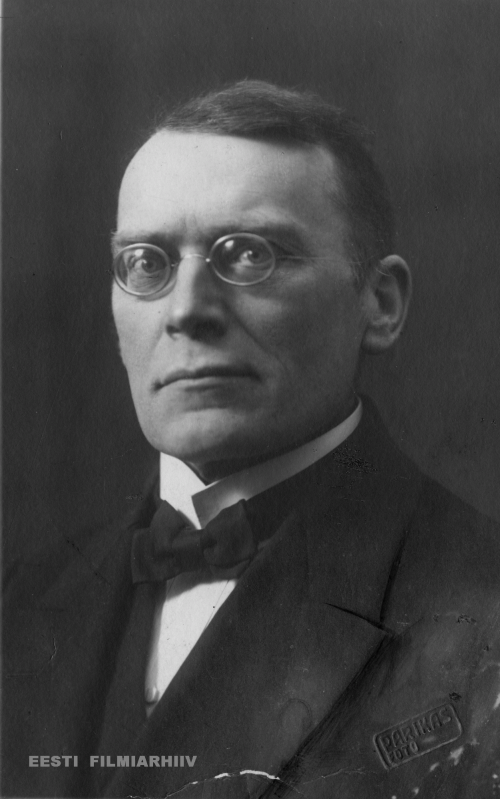
The Constituent assembly elected the first members of the Supreme Court in October 1919. A member of the Constituent Assembly Kaarel Parts (photo on the right side) was elected the President of the court, Paul Beniko, Rein Koemets, Jaan Lõo, Hugo Reiman, Martin Taevere and Peeter Puusepp were elected members of the court. The Supreme Court of that time comprised 11 members.
The Constituent Assembly declared Tartu as the seat of the Supreme Court. The first public session of the Supreme Court took place on 14 January 1920 in the assembly hall of Tartu Town Hall. Pursuant to law the Supreme Court was first and foremost a court of cassation. There were three departments in the court, the highest body was the court en banc. Cassation proceedings were allowed in all civil and criminal matters, restrictions were minimum.
The Civil Department of the Supreme Court heard appeals in cassation against the judgments of National Court of Appeal (Kohtupalat) and appeals against judgments of Justice of the Peace Courts (rahukogud) as the courts of second instance.
The Criminal Department was competent to hear appeals and protests in cassation against the judgments of National Court of Appeal and Justice of the Peace Courts in criminal matters. The department was also the highest military court.
The Administrative Department of the Supreme Court was the highest administrative court. The Supreme Court was the first and the last court instance which reviewed complaints against the decisions, orders and failures to act of ministries and other higher administrative agencies. It was also possible to submit appeals for revision of and protests against the judgments of Justice of the Peace Courts and justices of the peace in administrative matters.
The following were within the competence of the Supreme Court en banc:
- administration of the lower courts;
- appointment to and release from office of judges;
- unification of judicial practice.
In the interest of guaranteeing uniform interpretation of law the Supreme Court en banc and the Departments could give binding interpretations of laws. These were published for general information in the Riigi Teataja (The State Gazette) and in law journal Õigus (The Law).
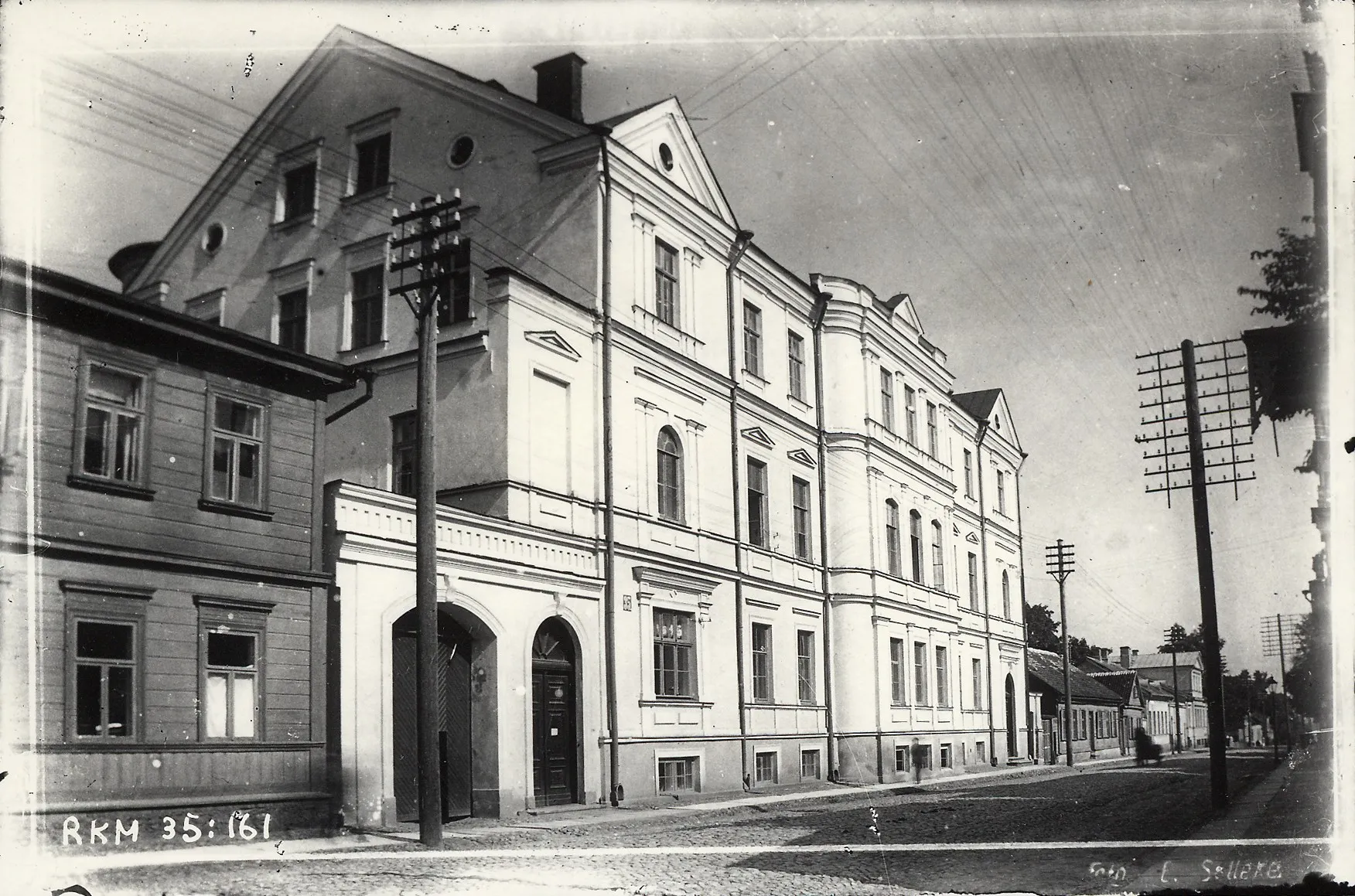
The first building of the Supreme Court in Tartu on Vanemuise Street.
The Supreme Court comprised a State Prosecutor’s Office, headed by a prosecutor of the Supreme Court. The 1939 Amendment of the Constitution Act and the Constitution of 1938 placed the appointment to and release from office of judges within the competence of the Head of State. By the decree of the Prime Minister of 1934 the Supreme Court was transferred from Tartu to Tallinn. In 1935 the Supreme Court started its work in Wismari Street, Tallinn.
In 1940 the Soviet Union annexed the Republic of Estonia and this resulted in the liquidation of the Supreme Court.
On 29 December 1940 a directive on the termination of the activities of the Supreme Court was issued. Two days later the Supreme Court held its last session. It is known that in 1940 justices Peeter Kann, Paul Välbe and Aleksander Hellat were arrested. Kaarel Parts died of an illness on 5 December 1940.
In 1940, when the Supreme Court was liquidated, 52 years remained until the appointment of the new President and 53 years until the re-opening of the Supreme Court in Tartu.
The foundations for the restoration of the activities of the Supreme Court were laid by the Constitution of the Republic of Estonia, adopted by a referendum on 28 June 1992. The Constitution vested with the Supreme Court the functions of a court of cassation and of a court of constitutional review. Tartu became the seat of the Supreme Court once again.
The first public session of the newly re-established Supreme Court took place on 27 May 1993, in the assembly hall of Tartu Town Hall. The session was chaired by the first President Rait Maruste. The President of the Republic Lennart Meri and the former secretary of the Administrative Department of the Supreme Court Robert Tasso participated as guests of honour.
From 1998 to 2004 the President of the Supreme Court was Uno Lõhmus, and he was followed by Märt Rask. The term of office of Märt Rask ended in September 2013, and he was followed by Priit Pikamäe. Since 4 February 2019, the President of the Supreme Court is Villu Kõve.
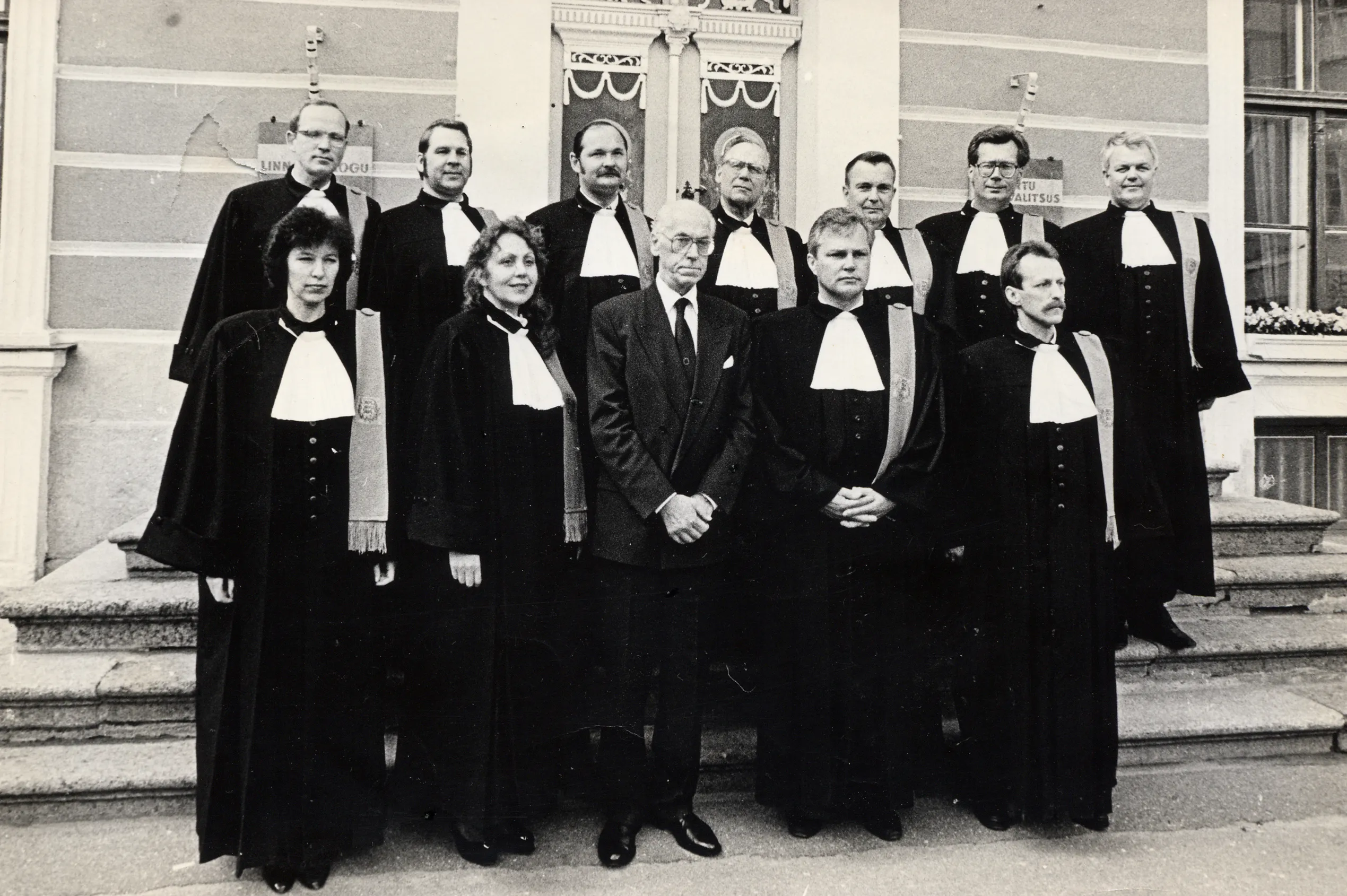
First session: Supreme Court judges standing on the steps of the Tartu Town Hall with the President of the Republic, Lennart Meri, on May 27, 1993
Facts from the History of the Supreme Court
The re-established Supreme Court holds its first session in the Town Hall of Tartu.
A referendum approves the Constitution of the Republic of Estonia, which provides for the re-establishment of the Supreme Court.
The Supreme Court holds its last regular session in Tallinn. As of the following day, the Supreme Court ceases its activities.
Pursuant to a decree of the Head of State, the Supreme Court is relocated from Tartu to Tallinn in 1935.
The Constituent Assembly approves the Constitution.
The first session of the Supreme Court is held in the Town Hall of Tartu.
The Constituent Assembly adopts the Supreme Court Act and elects Kaarel Parts as the Chief Justice of the Court.
The Estonian Provincial Assembly adopts the Manifesto of Independence.