

Ukrainian Constitutional Court learned about Estonian legal system
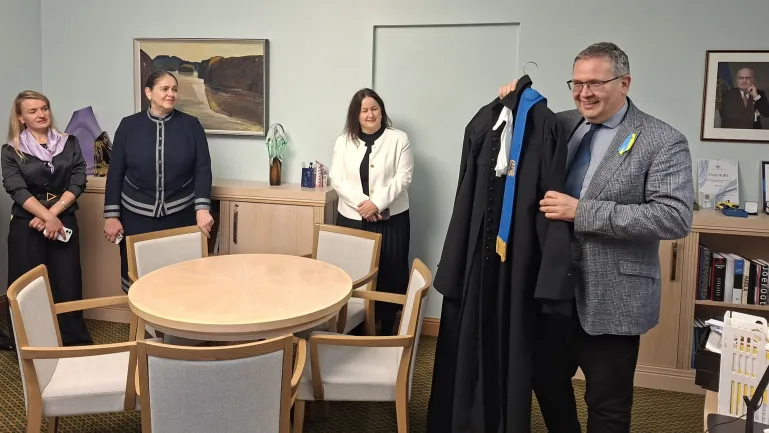
The Supreme Court of Estonia hosted a delegation from the Constitutional Court of Ukraine between September 20 and 25 to introduce Estonia’s system of constitutional review, ongoing judicial reform and the digitalisation of the administration of justice, and to exchange experiences on the organisation of the work of the courts in the two countries.
Particular attention during the visit was paid to European Union (EU) law and Estonia’s experience of accession to the EU – issues that are becoming increasingly important in preparation for Ukraine’s accession.
At the Ministry of Justice and Digital Affairs, Deputy Secretary General Mari-Liis Mikli and Adviser Margit Lauri introduced the guests to Estonia’s current model of judicial administration and the changes that will enter into force on 1 October 2026 and 1 January 2027. They also discussed judges’ workloads, specialisation and the recruitment of new judges.
Special attention was paid on digital solutions, used in Estonian courts and developed with the support of the Ministry. Among other things, the guests were introduced to document search, the anonymisation and transcription of court decisions, and the prospects for using artificial intelligence in the judicial system.
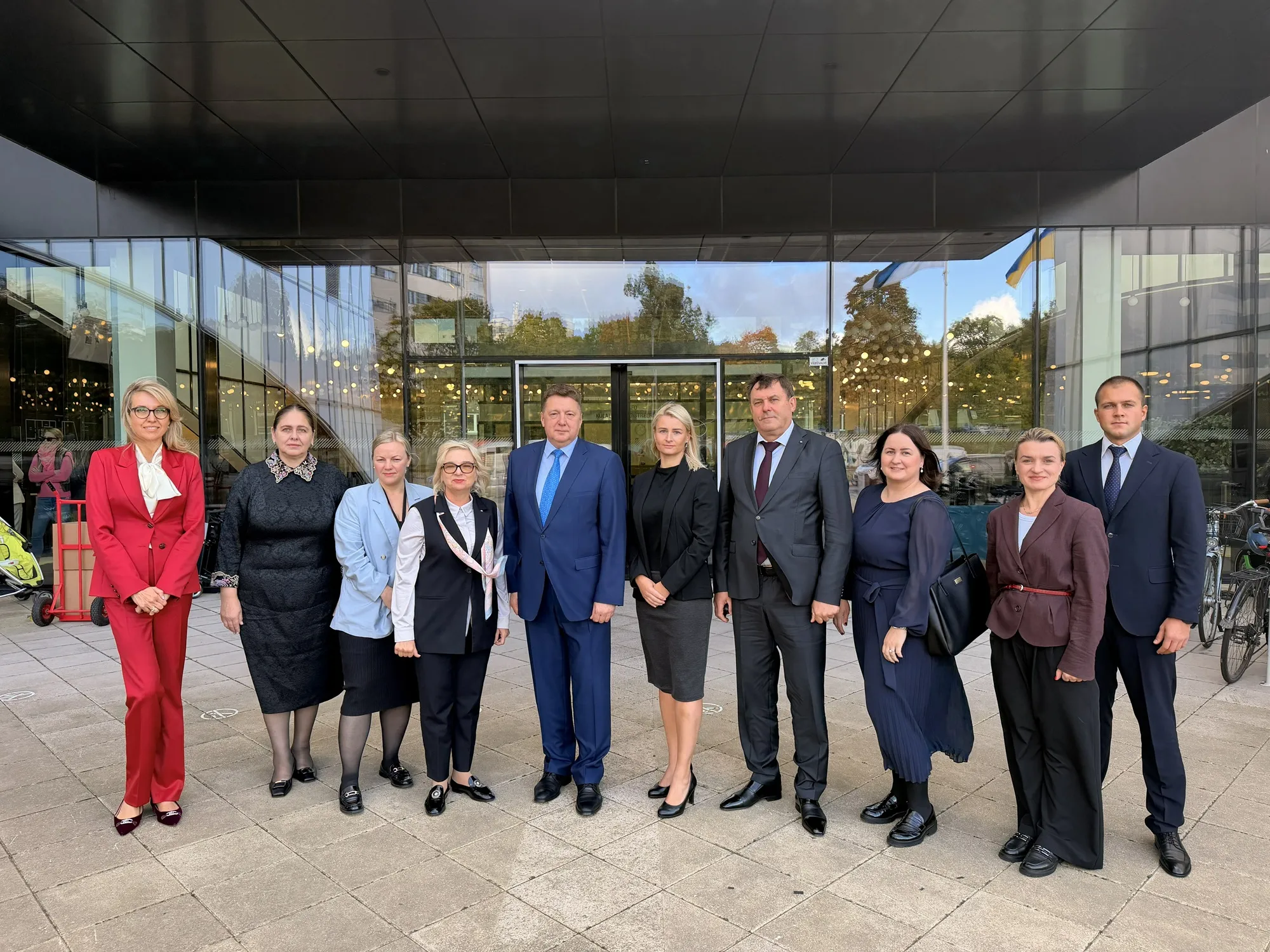
Estonia’s experience of accession to the EU
At the Riigikogu, the Chair of the Constitutional Committee Ando Kiviberg and committee members Pipi-Liis Siemann and Ants Frosch discussed the links between Estonian legislation and constitutional review, as well as the respective roles of the Supreme Court and Parliament. The Ukrainian delegation was particularly interested in Estonia’s experience of joining the European Union: how Estonia’s legal system was amended for this purpose and how the relationship between EU law and the Constitution was addressed. The security of the digital state was also discussed, including how to protect state information systems and data in the face of constantly changing risks.
At the Office of the Chancellor of Justice, Head of Foreign Relations Kertti Pilvik, together with Head of the Legal Order Protection Department Marju Uljas and Senior Adviser Liina Lust-Vedder, gave the guests an overview of the role and functions of the Chancellor of Justice as an independent constitutional institution. The presentation covered constitutional review, the functions of the ombudsman, competence related to disciplinary proceedings against judges, and other areas of responsibility of the Chancellor of Justice.
Among other issues, the delegation was interested in oversight of surveillance activities and cooperation between the Chancellor of Justice and the courts.
Constitutional review in Estonia and Ukraine
During a seminar held at the Supreme Court, Estonian and Ukrainian colleagues presented the organisation and jurisdiction of their respective courts. The Estonian side provided an overview of the chambers of the Supreme Court, constitutional review proceedings, and abstract and concrete constitutional review. An important topic of discussion was the interpretation and application of EU law in the case law of the constitutional review court.
Representatives of the Constitutional Court of Ukraine introduced the structure, jurisdiction and workload of their court. The Constitutional Court of Ukraine has 18 judicial positions, with appointments involving the President of Ukraine, the Parliament and the Congress of Judges of Ukraine.
During the study visit, the Ukrainian delegation also attended the Estonian Lawyers' Days, where they listened to panel discussions entitled “Preventive State” and “Political Polarization in Contemporary Democracies”.
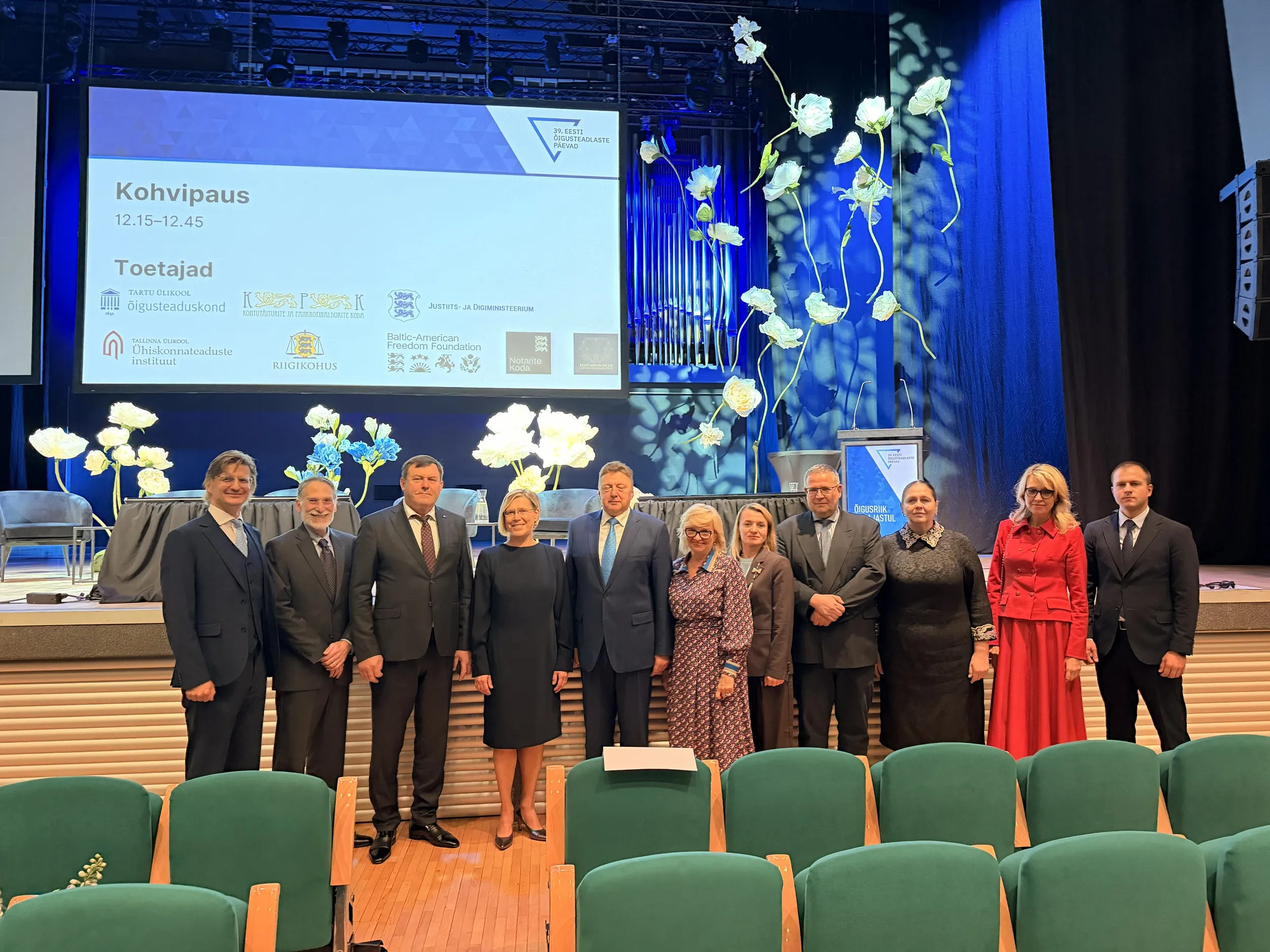
The guests also met with Mario Truu, Chief Judge of the Tartu Circuit Court; Marek Vahing, Chief Judge of Tartu County Court; and Ene Andresen, Chief Judge of Tartu Administrative Court, and visited the Tartu courthouse.
According to Karin Leichter-Tammisto, Adviser to the President of the Supreme Court, the multi-day study visit provided Estonian and Ukrainian colleagues with an opportunity to compare the judicial systems of the two countries and exchange practical experiences on judicial administration, constitutional review, digitalisation and EU law. “The knowledge and experience gained during the meetings are also important in the context of Ukraine’s ongoing preparations for accession to the European Union,” she added.
In their feedback on the visit, the Ukrainian colleagues highlighted the openness, professionalism and warm welcome extended by their Estonian counterparts, which, in their words, made the study visit an informative and valuable experience. The delegation expressed its conviction that the visit further strengthened the friendly relations between the two courts and laid a strong foundation for continued cooperation, professional exchange of experience and mutual support in the field of constitutional review.